
The Knobbed Hornbill in Sulawesi is no doubt one of the most beautiful hornbills in the world to see, and you can see them at the Tangkoko National Park in this part of Indonesia.
There are only two hornbills in Sulawesi, which are the Knobbed Hornbill (Rhyticeros cassidix), also known as the Sulawesi wrinkled hornbill and the Sulawesi Hornbill, which makes them two of the star birds that birders and photographers want to see.
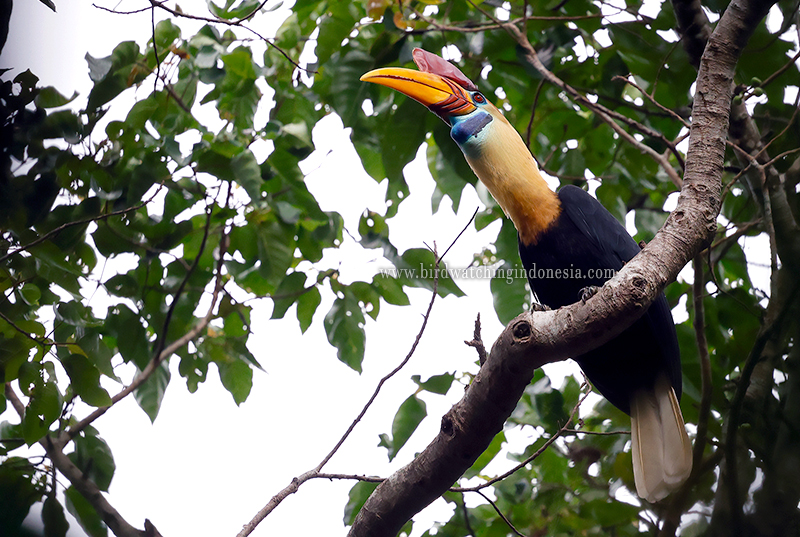
Knobbed Hornbill in Sulawesi
These large and colorful hornbills are in the wild and are quite similar to the Great Hornbill (Buceros bicornis). This beautiful bird is known for its striking appearance, and below is information about the hornbill;
- Size: It’s one of the largest hornbill species.
- Bill: The yellow bill is prominent, and the casque (the horn-like structure on top of the bill) varies between sexes.
- Male: The male has a rufous or buff face and neck, a high red casque, and orange-red eyes.
- Female: The female typically has a black face and neck, a yellow casque, and brownish eyes.
- Both males and females have white tail feathers, pale blue skin around the eye, and a distinct dark blue throat to add to their unique look.
- The feet and overall blackish colouration further help identify them.
The Knobbed Hornbill (Aceros cassidix) is also an Indonesian endemic bird with a fascinating profile:
- Range: It is found in Sulawesi and on Buton, Lembeh, Togian, and Muna Islands. Its habitat includes evergreen forests up to 1,800 meters in elevation, secondary forests, woodlands, and plantations.
- Appearance: This species is notable for its large size and distinctive casque. The male typically has a more colourful and pronounced casque than the female. The casque on this hornbill is unique, often having a knob-like structure.
- Habitat and Behavior: Knobbed Hornbills are versatile in their habitat choices, making use of both primary and secondary forests. They are frugivorous, primarily feeding on fruits, but will also eat insects and small vertebrates. Their vocalizations and displays are important to their behaviour, particularly during the breeding season.
The Knobbed Hornbill is an integral part of its ecosystem, contributing to seed dispersal and playing a role in the health of the forest environment.
Conservation Efforts
The Knobbed Hornbill is classified as Vulnerable by the IUCN. This status reflects the species’ precarious situation despite its local abundance. Below are more details about the threats and conservation issues:
- Habitat Destruction: The primary threat to the Knobbed Hornbill is habitat loss due to logging. These hornbills rely on large, mature trees for nesting and breeding, and deforestation significantly impacts their breeding sites. The destruction of their forest habitat reduces the availability of suitable nesting trees and foraging grounds.
- Hunting: Although hunting is not as significant a threat as habitat loss, it still affects local populations. In some areas, hornbills are hunted for their casques or for use in traditional ceremonies, which can contribute to population declines.
- Conservation Efforts: Conservation measures for the Knobbed Hornbill include habitat protection and management, as well as efforts to reduce hunting pressures. Establishing and enforcing protected areas where these birds live is crucial for their survival. Additionally, raising awareness about the species and its ecological role can help garner support for its conservation.
Conclusion
Rest assured, there have been efforts to address these threats, which are essential for ensuring the survival of the Knobbed Hornbill and maintaining the health of its forest habitat. But as always, more needs to be done to increase awareness.
To see the beautiful Knobbed Hornbill in Sulawesi, you can do so by arranging with one of the Sulawesi bird guides who operate in Manado and the Tangkoko National Park. You can also contact us at Birdwatching Indonesia, as we can lead you to reputable bird guides for Tangkoko National Park.
